
There are some audiobooks you put on for information.
And then there are audiobooks you put on because you need someone to sit with you.
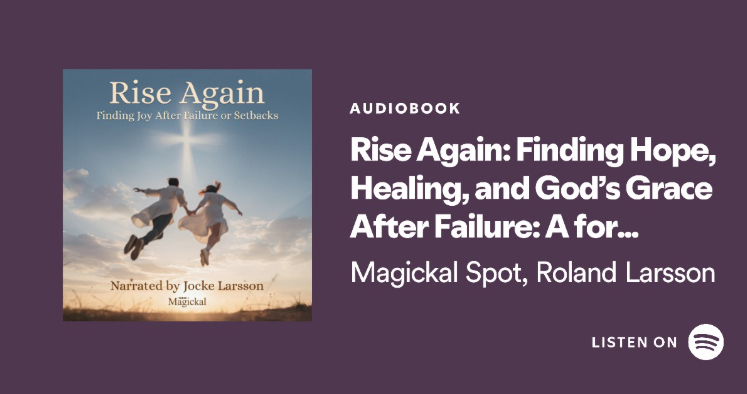
Rise Again: Finding Joy After Failure or Setbacks is firmly in the second category.
I listened to this one slowly — not because it drags, but because it doesn’t want to be rushed. It’s the kind of audiobook that meets you exactly where you are, especially if you’re carrying quiet shame, disappointment, or that heavy feeling that comes after things don’t go the way you hoped.
What struck me almost immediately wasn’t just the message, but the experience of listening.
Key Takeaways
Rise Again: Finding Joy After Failure or Setbacks is a spiritually reflective audiobook that combines calm narration, emotionally grounded storytelling, and healing-frequency background audio to support listeners recovering from personal failure. It emphasizes forgiveness, slow rebuilding, and the idea that brokenness can become a foundation for future growth rather than a permanent identity.
A Voice That Doesn’t Rush Your Healing
From the opening moments, the tone is warm, calm, and deeply human. There’s no shouting, no motivational hype, no pressure to “get over it.” Instead, the narrator speaks like someone who understands what failure actually feels like — the way it sits on your chest, the way it sneaks into your thoughts at night.
What really amplifies this is the custom background audio, which is subtly built around a healing frequency. You don’t consciously notice it at first, but you feel it. The pacing, the pauses, the softness in the soundscape all work together to create a sense of safety.
This isn’t background music meant to entertain. It’s more like an emotional container — something that allows the words to land deeper without overwhelming you.
I found myself relaxing into the listening experience in a way that doesn’t happen often with spoken-word content.
Failure, Without Sugarcoating
The audiobook opens by naming something many people are afraid to admit: failure doesn’t just hurt — it rewrites how we see ourselves.
Instead of glossing over that pain, Rise Again leans into it. It talks openly about the inner voice that shows up after mistakes. The one that says you’ve ruined everything. The one that tells you you’re disqualified now.
One of the most powerful parts of the audiobook is how it reframes failure not as a moral flaw, but as a breaking point that creates space. The metaphor of soil being broken before seeds can grow comes back again and again — and it works because it feels true, not forced.
The stories of Peter, Moses, David, Rahab, and Paul aren’t presented as distant Bible trivia. They’re framed as deeply human stories of people who failed publicly, painfully, and permanently — and still became vessels for something greater.
Forgiveness That Actually Feels Believable
A lot of spiritual content talks about forgiveness in theory. This audiobook does something different — it addresses the part most people get stuck on: accepting forgiveness emotionally, not just intellectually.
The section revisiting Peter after the resurrection is especially moving. The image of Jesus cooking breakfast instead of giving a lecture stayed with me long after I finished listening. It reframes forgiveness as restoration, not tolerance.
What I appreciated most is that the audiobook doesn’t shame the listener for struggling to forgive themselves. It names that struggle directly and gently challenges the idea that holding onto guilt is humility.
There’s a quiet firmness here that feels earned, not preachy.
New Beginnings Aren’t Always Clean or Aesthetic
One of the most grounded parts of Rise Again is its honesty about what new beginnings actually look like.
They’re not always shiny.
They’re not always immediate.
And they’re rarely Instagram-worthy.
Sometimes they look like staying in a job you didn’t plan on.
Sometimes they look like rebuilding trust slowly.
Sometimes they look like showing up again and again with no visible progress.
The audiobook does a beautiful job of normalizing this slow rebuild, especially with the imagery from Isaiah about paths through the wilderness rather than around it.
This is where the healing-frequency background audio really shines. During these sections, the steady, almost meditative soundscape makes it easier to sit with discomfort without checking out.
Brokenness as a Source of Power, Not Shame
The Kintsugi metaphor — broken pottery repaired with gold — is used often in spiritual circles, but here it doesn’t feel cliché. It feels earned, especially when paired with Paul’s reflections on weakness and grace.
One line that stayed with me was the idea that the container has to crack for the light to shine out. That theme runs quietly through the entire audiobook: you are not broken beyond use — you are broken into usefulness.
Rather than encouraging listeners to hide their cracks, the audiobook invites them to stop pretending they were never broken in the first place.
Who This Audiobook Is For
This audiobook is especially powerful if:
- You’re coming out of a personal or professional failure
- You feel stuck in shame, even after time has passed
- You’re spiritually open but emotionally tired
- You want encouragement without pressure or performance
- You appreciate calm, reflective audio experiences rather than high-energy motivation
It’s not about quick fixes. It’s about staying with yourself long enough for something new to emerge.
How It Compares to Other Faith-Based Audiobooks
There are many excellent faith-based and personal growth audiobooks available on platforms like Audible and Apple Books. Some focus more on theology, others on productivity or confidence-building.
What sets Rise Again: Finding Joy After Failure or Setbacks apart is how integrated the experience feels. The message, pacing, narration, and background audio are clearly designed to work together — not as separate elements, but as a single emotional journey.
It feels less like a lecture and more like being guided through a season.
Frequently Asked Questions
Is Rise Again a motivational audiobook?
No. While it is encouraging, it is primarily reflective and restorative rather than motivational or goal-oriented.
Does the audiobook require strong religious beliefs?
The audiobook is faith-based and uses biblical narratives, but it focuses on emotional experience and meaning rather than doctrine.
What role does the background audio play?
The background audio is intentionally designed around a healing frequency to support calm focus, emotional safety, and reflective listening.
Is this audiobook suitable for anxiety or emotional burnout?
Yes. The pacing, tone, and sound design make it particularly suitable for listeners experiencing emotional fatigue or overwhelm.
How long is the audiobook?
Approximately 30 minutes, structured as a guided emotional journey rather than segmented lessons.
Final Thoughts
I finished this audiobook feeling quieter — not euphoric, not “fixed,” but steadier. And honestly, that felt like the real gift.
Rise Again doesn’t promise instant breakthroughs. It promises companionship in the middle of the process. It reminds you that failure isn’t the end of your story — it’s often the place where depth, compassion, and authority are formed.
If you’re in a season where getting back up feels intimidating, this audiobook doesn’t tell you to run.
It simply says: stand up when you’re ready — and I’ll be here with you when you do.
And sometimes, that’s exactly what we need.
Key Themes and Insights
1. Failure Is Not the End of the Story
The audiobook repeatedly emphasizes that failure is often the moment where transformation begins, not where identity ends.
2. Forgiveness Is Restoration, Not Tolerance
Forgiveness is presented as an active rebuilding process rather than passive acceptance or shame-based permission.
3. New Beginnings Are Often Unremarkable at First
Rather than promising dramatic turnarounds, the audiobook highlights faithfulness, consistency, and quiet rebuilding.
4. Brokenness Can Become Authority
Personal failure is reframed as the source of future wisdom, compassion, and leadership.
Who This Audiobook Is Best For
This audiobook is especially helpful for:
- People recovering from career, relationship, or personal failure
- Listeners struggling with lingering shame or regret
- Those seeking faith-based encouragement without emotional pressure
- People who prefer calm, reflective audio over high-energy motivation
- Anyone in a season of rebuilding rather than restarting
How It Differs From Other Healing Audiobooks
Unlike many personal development or faith-based audiobooks that focus on productivity, confidence, or immediate action steps, Rise Again prioritizes emotional stabilization first.
Key differences include:
- No emphasis on hustle or rapid transformation
- No performance-based spirituality
- Integrated sound design for emotional grounding
- Focus on presence and process rather than outcomes
This makes it particularly effective for listeners who feel overwhelmed by “fix yourself” messaging.